
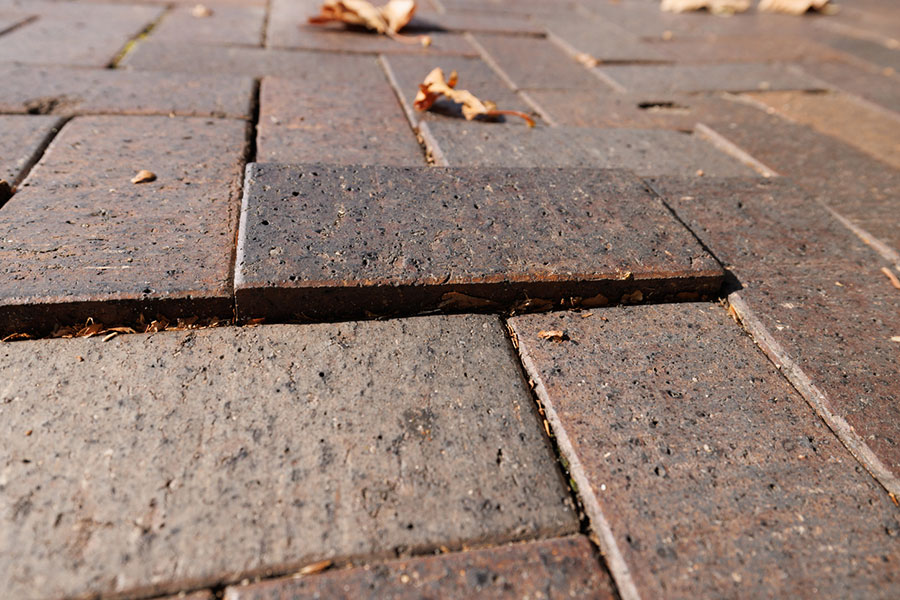
With fall upon us, it’s time to put away all the reminders of a summer well enjoyed. After you store the patio furniture in the garage, cover up the grill, and put all the outdoor kids’ toys in the shed, take a look around your yard and inspect your brick pavers for areas of concern.
Doing this in fall will ensure you can fix any problems now before the snow and ice of winter settle in. Maybe you’ve spotted a loose paver, or maybe a section of your patio is sinking. Whatever the case, it’s smart to call a licensed mason in Metro Detroit to fix those problems areas before the upcoming freeze and thaw cycles make things worse.
Here’s a checklist of what to look for during your fall inspection.
1. Check For Sinking Pavers
Walk slowly across your patio. How does it feel underfoot? Do you sense areas that may be dipping or uneven? It’s common for pavers to settle over time as the base shifts or erodes.
In particular, keep an eye out for:
- Sections that seem lower than the surrounding patio
- Small dips where water pools after a rain storm
- Pavers that are not level with surrounding pieces
- Uneven areas that could lead to a tripping hazard
The good thing about brick pavers is that you can lift out one and replace it without having to re-do the whole patio or porch. However, it should be done by a professional, as the base must be corrected before the new paver is installed. The existing pavers also must be reset, and this takes a trained eye.
2. Look For Loose or Wobbly Pavers
When you step on the pavers, make sure they don’t rock or shift. Take note of any crumbling or loose pieces. These pieces can create an uneven walking surface that signals something’s off beneath the patio or walkway. It will only get worse over winter, and you don’t want to be met with a surprise come spring.
3. Take a Look Between the Pavers
Inspect the joints connecting the pavers. Perhaps the gaps are wide than they used to be, or maybe certain spots has lost considerable joint material. This material is what ensures the stability of your pavers, so when it’s lacking, pavers are able to move. If you see weeds growing in the joint areas, this is also a sign the gaps are widening.
4. See What Happens After It Rains
After the next rainstorm, take note of where the water goes, paying particular attention to:
- Puddles in low areas
- Water that collects near the foundation
- Pooling around steps or patio edges
- Areas that stay wet longer than the rest of the patio
Standing water could be a sign of settling or grading issues. If not corrected now, that water will freeze and create a slip hazard during winter.
5. Don’t Forget the Edges
The center of your patio may still look great while the perimeter is beginning to move.
Walk around the outside and look for pavers that are spreading, separating or shifting outward. Edging helps keep a paver installation in place. When that restraint begins to fail, movement can gradually work its way farther into the patio.
Should You Fix It Now or Wait Until Spring?
Not everything you find requires a repair. A few weeds or a dirty surface may simply call for routine maintenance. Noticeable sinking, loose pavers, drainage problems or significant movement deserve a closer look.
The important thing is knowing what condition your patio is in before it disappears beneath leaves and eventually snow. Even if repairs are planned for later, identifying trouble now gives you a head start.
Give Your Patio One Last Walk-Around
Your patio worked hard all summer. Before you forget about it until next spring, give the pavers one final inspection.
Neighborhood Masonry Specialist installs and repairs pavers, patios, walkways and other masonry throughout Metro Detroit. If you’ve spotted sinking pavers, uneven areas or other signs that your patio needs attention, contact Neighborhood Masonry Specialist for a free estimate at (586) 213-3380.