
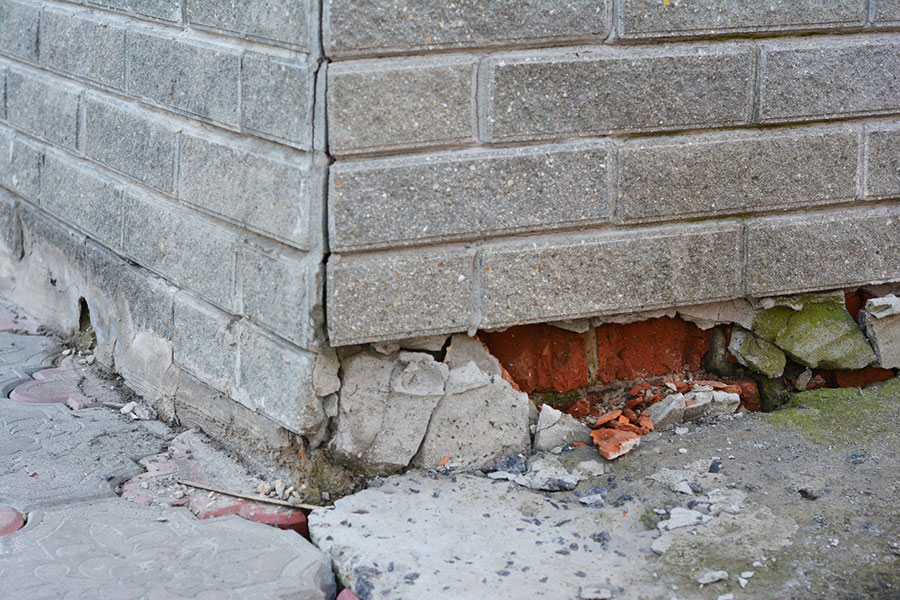
If you’ve been noticing that the brickwork near the bottom of your home looks worse than that above, you’re not alone. It’s a common problem for Michigan homes to experience damage to bricks near ground level, whether you’re seeing crumbling mortar, flaking bricks, or some other problem.
After all, the lower portion of your exterior is constantly exposed to water, snow, soil, splash back, and freezing and thawing – conditions that masonry farther up the wall doesn’t necessarily get as severely.
Let’s talk about why this damage happens and how it is best repaired.
The Bottom of Your House Takes a Beating
Brick is durable, but even the highest quality brick at the lowest portion of an exterior wall has to contend with a lot of wear and tear.
Every time it rains, water hits the ground, porch, driveway, patio, or landscaping, splashing back onto nearby masonry. In winter, snow drifts pile up against the house and can conceivably stay there for weeks or even months. Try not to shovel or plow snow right up against your house.
This puts your lower brick and mortar through a lot – mainly constant exposure to moisture. Meanwhile, masonry that’s higher up dries out quickly, saving it from the demands of the season.
After a rain storm, check for signs of back splash. Take note of what’s happening around the damaged section. Perhaps a downspout empties out nearby, or maybe water is pooling at the foundation. Or perhaps roof runoff is hitting your walkway and splashing against the brick.
Either way, don’t discount the importance of drainage in all this.
Michigan Winters Add Freeze-Thaw Stress
Moisture is even more of a concern when temperatures repeatedly swing from below freezing to above. After a rain storm, water gets into tiny cracks, porous masonry, and deteriorating mortar joints. When temperatures plummet, that water freezes and expands. Over time, this back-and-forth cycle can damage brickwork.
Be on the lookout for:
- Flaking or crumbling brick surfaces
- Loose masonry
- Cracked or missing mortar
- Small cracks becoming larger
- Sections that are more damaged than the brick above them
Don’t Overlook the Mortar
Damaged bricks often get all the attention, but the truth is, the mortar joints are where the first signs of trouble often start. When joints near ground level are cracked, recessed, loose, or crumbling, moisture can enter much more easily.
Your brick repair company in Michigan can inspect the situation and may suggest tuckpointing to address deteriorated mortar. However, it’s not enough to just replace mortar without first fixing the persistent moisture or drainage issues that caused the damage in the first place.
Why Does the Damage Keep Coming Back?
If you have repeatedly had the bottom courses of brick repaired, yet the issue comes back again and again, another patch job won’t help the situation.
If you are experiencing recurring damage, consider the surrounding conditions as related to:
- Roof drainage
- Grading
- Downspout discharge
- Snow accumulation
- Hardscapes
A lasting masonry repair starts with a full understanding of why a particular area keeps failing.
Contact Neighborhood Masonry Specialist
If you’re concerned about the lower portion of brickwork on your Michigan home, we can evaluate the damage, determine the appropriate repair, and restore that area of masonry by carefully matching the existing materials. Call (586) 213-3380 to schedule an estimate.